Application
Hydraulic oil for excavators and construction equipment
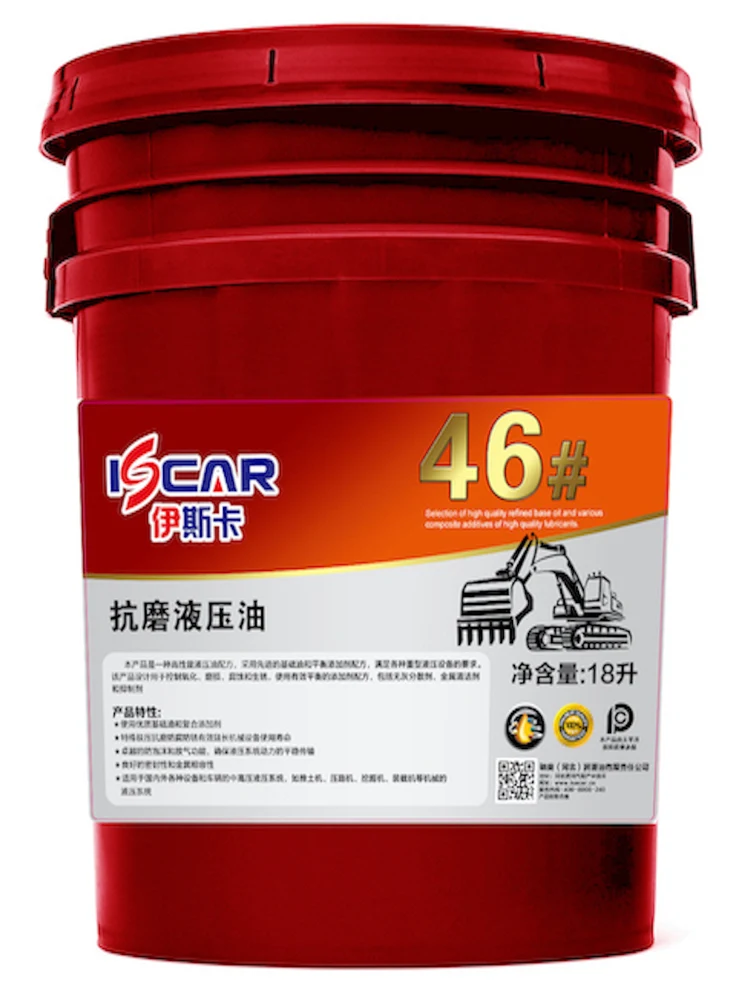
Confirm the pump and ISO VG grade. 46# is listed for systems that specify ISO VG 46; 68 or other grades are confirmed on enquiry.
Excavators and construction equipment use hydraulic oil for the pump, valves, cylinders and travel motors. The correct viscosity depends on the pump manufacturer, operating temperature and start-up conditions, not on the machine's size alone.
This page helps prepare a hydraulic-oil enquiry. It does not replace the equipment manual, the pump specification or the current TDS.
46 or 68?
ISO VG 46 and 68 describe viscosity at 40°C; 68 is thicker. The pump manufacturer sets the allowable viscosity range. A hotter system may need a higher grade, while a cold start may need a lower one. Do not choose a grade by habit or by what is available.
Contamination and filtration
Hydraulic failures are often related to contamination, not only viscosity. Keep the oil clean, use the specified filters and check for water or particles. When changing oil, follow the manufacturer's flushing and filling procedure.
What to send in an enquiry
Send the machine model, pump type, required ISO VG grade, operating temperature and current oil. Add the pack size, quantity and destination. If the manual requires 68 or another grade, say so; 46# is not a universal substitute.
Products
Relevant product options.
Application FAQ
Questions to settle before ordering.
Can I use 46# in a machine that requires 68?
No. Use the grade specified by the equipment or pump manufacturer. If 68 is required, ask for a product that meets that grade and the current TDS; do not substitute 46# to use what is available.
Can I mix 46# with another hydraulic oil?
Avoid mixing different products or grades. In an emergency, a compatible product that meets the same specification may be used, but confirm with the equipment maker and return to the correct oil.
Is 46# an anti-wear hydraulic oil?
The page does not assert an anti-wear classification. Check the TDS for the exact performance claims and any OEM approval before ordering.
Next step
Your vehicles. Your market.
Let’s talk requirements.
Tell us what you need, where you need it and how much.